Access
Navigation without the traditional barriers.
Open architecture, flexible acquisition models, and 3D imaging designed to expand where advanced navigation can be deployed.
Open spine navigation
Advanced navigation built for greater access, better economics, and familiar workflows.
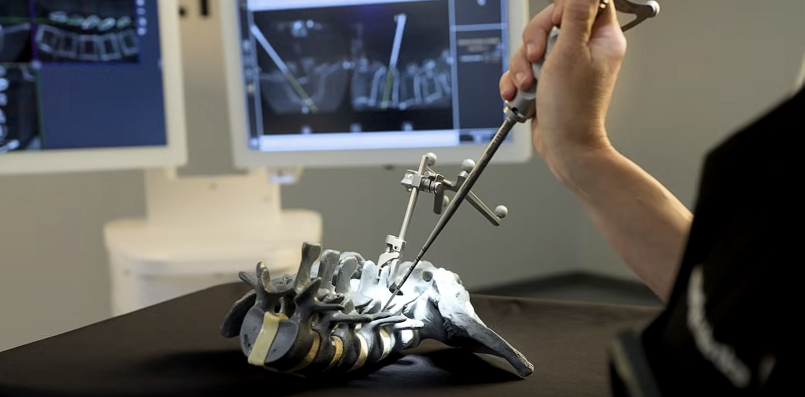
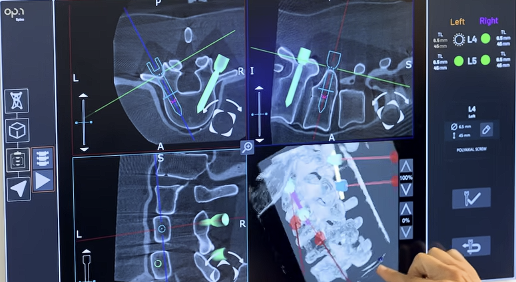
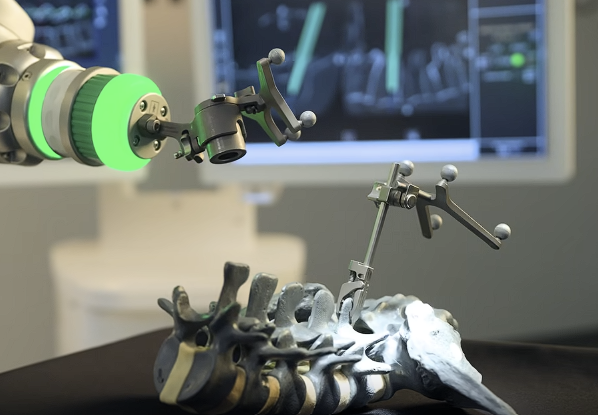
In partnership with eCential Robotics
Robotic guidance is shown as a potential platform expansion. Current availability and supported configurations require confirmation from VEXUS.Navigation on your terms
Advanced navigation shouldn’t require a million-dollar capital investment, a closed implant ecosystem, or an entirely new OR workflow.
Open architecture, flexible acquisition models, and 3D imaging designed to expand where advanced navigation can be deployed.
A platform designed to reduce the capital and per-case burden traditionally associated with advanced navigation.
Familiar navigation workflows, existing C-arm infrastructure, and the freedom to maintain implant choice.
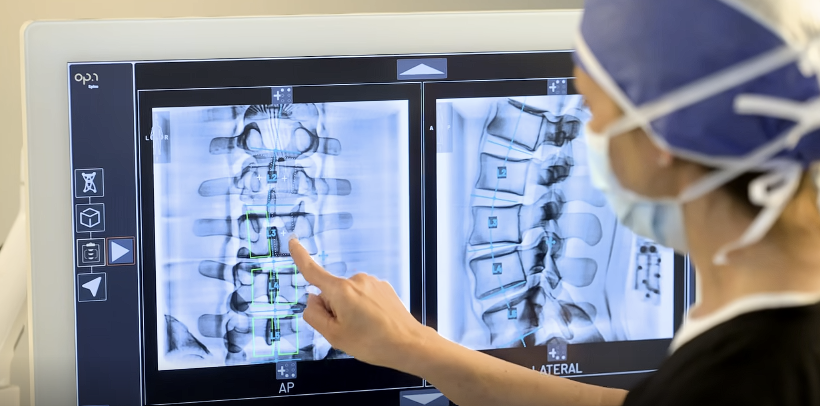
Existing 2D C-arm infrastructure. Intraoperative 3D imaging. One coordinated navigation workflow.
Vexus + Pulmera C-Beam
Vexus can pair with Pulmera C-Beam to support intraoperative 3D imaging using existing 2D C-arm infrastructure—bringing advanced navigation into a more familiar, capital-efficient workflow.
C-arm, instrument, procedure, and site compatibility must be confirmed with Vexus and Pulmera.
Built around the room
Vexus centers the clinical workflow while giving facilities and distributors room to structure deployment around their own operating model.
Maintain implant choice and familiar navigation workflows without making robotics the required starting point.
Plan around a compact footprint and flexible deployment economics aligned with outpatient space, staffing, and utilization.
Support navigation deployment and service while reinforcing the implant portfolio and surgeon relationships you already manage.
Platform overview
Explore four connected parts of the Vexus platform, designed to support a more adaptable outpatient spine workflow.
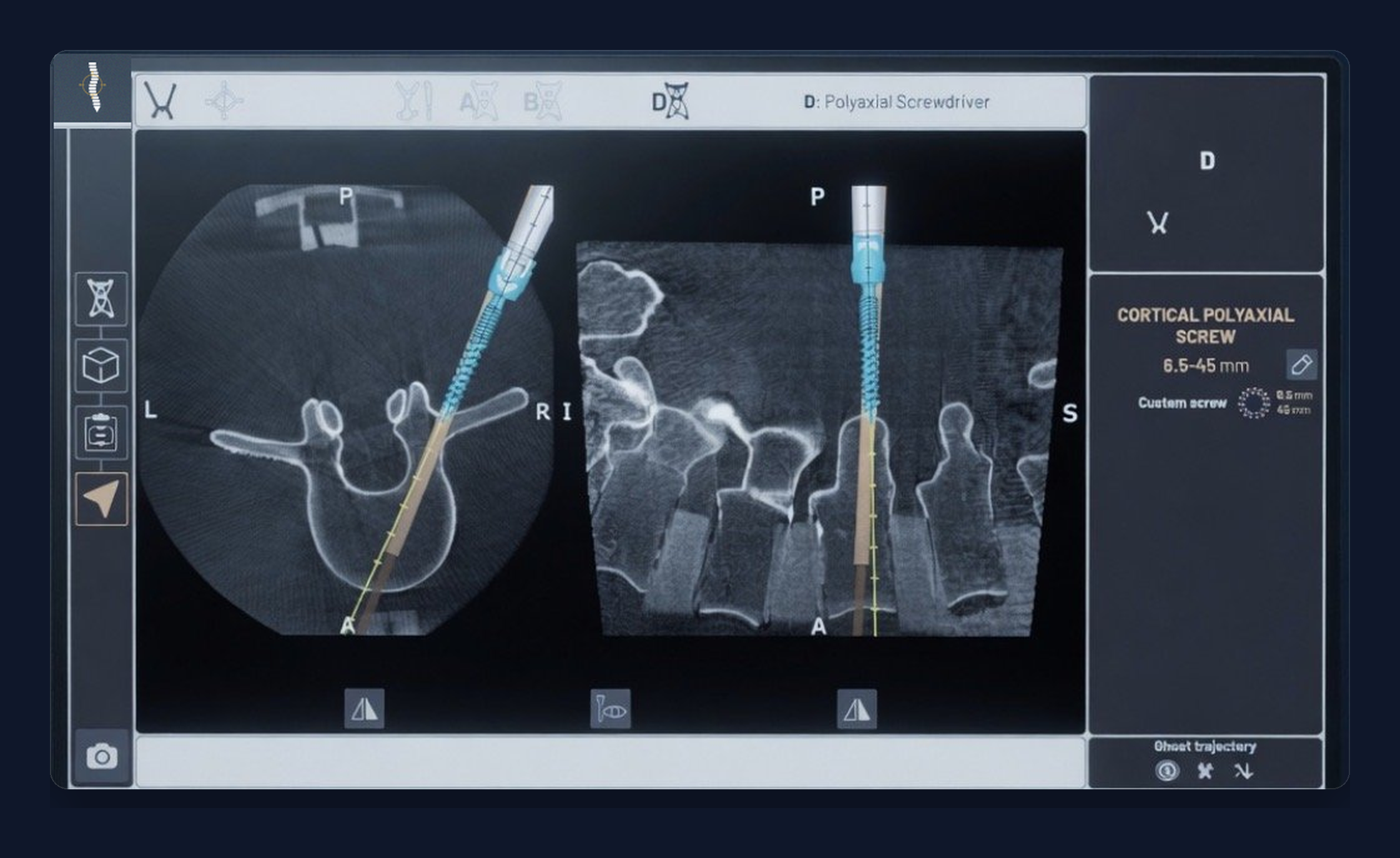
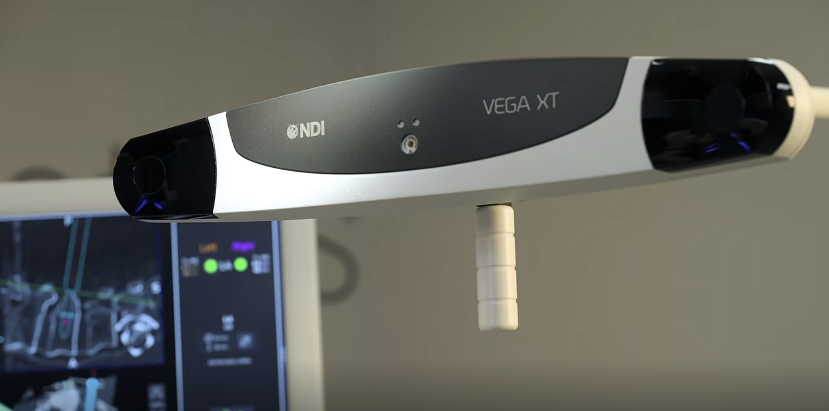
Navigation System
A mobile navigation system built to support a focused operating-room footprint.
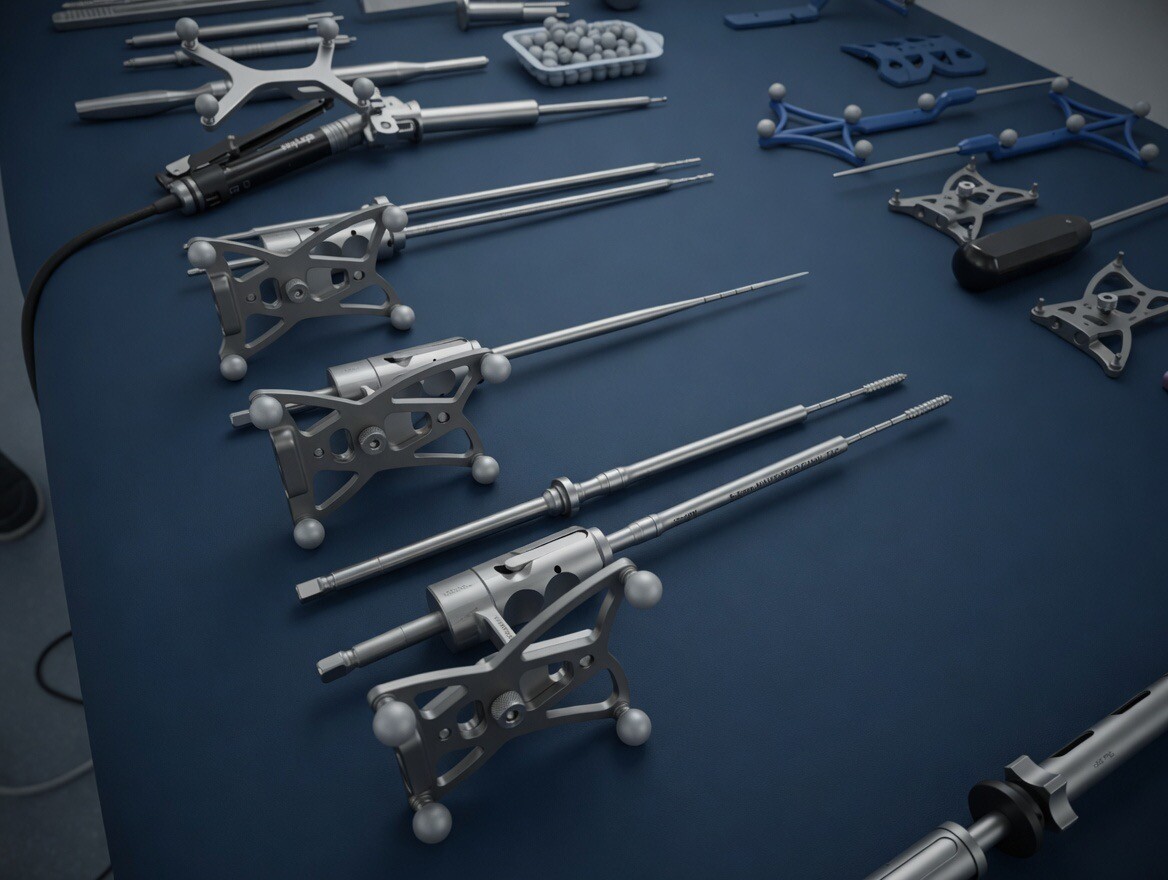
Instrument Compatibility
Tracking tools support navigation-enabled instruments, subject to configuration review.
3D Imaging Integration
Vexus and Pulmera C-Beam bring imaging and navigation into a coordinated workflow.
Distributor Platform
A platform for coordinating fleet, case, inventory, and service information.
Platform expansion
The platform is designed to support robotics as an add-on rather than a required starting point.
Robotics availability, timing, supported configurations, and intended use must be confirmed directly with Vexus and eCential Robotics.
Full workflow demonstration
Request the complete C-Beam workflow demonstration and see how Vexus fits your model. Prefer email? Contact info@vexusnavigation.com.